Sunday, September 11, 2016

The Good That Came Out of 9/11


I've never been one to dwell in the past. Whatever mistakes I've made, I learn from and move on. The people I've hurt, the people who have hurt me, I find it easier to forget them than to wonder what might have been.

September 11, that's a hard thing to ignore, particularly on a big fat juicy anniversary like the fifteenth.

Such tragedies don't happen often in a nation's history. Tragedies similar, yes. Hell, we lose more innocent people to gun violence in a year than we lost on September 11, by a factor of three.

Normally, I acknowledge the day with a small prayer for the victims and for the nation to find the wisdom to prevent this form occurring again.

Something bothered me this weekend, tho: usually out of terrible events, some good can be found: connections, outcomes, developments.

Take Pearl Harbor: you can trace a line from Pearl Harbor to the end of the Great Depression, the rise of the American automotive and housing industries (after the war, the GI Bill helped these become powerhouses), the racial and gender equality movements, the computer, nuclear energy, the rise of the middle class in America, and any number of other positives that shaped the nation today.

Maybe it's just too soon to really recognize what September 11 gave us a gift. After all, many of the things on the list of Pearl Harbor took decades to come about.

Some did not. Some were almost immediate.

So I meditated on this theme a little: can we point to anything and say it is ultimately a positive for our country?

Let's look at the immediate aftermath of the attacks: we declared war and invaded two nations, one of which, as it turned out, was not even close to having anything to do with the attacks (indeed, we shared a common enemy with Saddam Hussein and probably should have used him as our proxy in retaliating.)

We wasted trillions of dollars hunting down the perpetrators who planned and financed the attacks. We endangered our allies in the Coalition of the Bought and Paid For (7/7/07, among any number of terror attacks in Europe and Asia). We blew up a budget deficit that was already skyrocketing from the ill0conceived triple tax cuts of the Bush administration -- remember, Bill Clinton left us on the path to economic solvency with a surplus that, projected, could have paid off the entire national debt.

Our housing market exploded thanks to low interest rates, a President who on the day after 9/11 encouraged us to spend as a show of our patriotism -- encouraging people to take out HELOCs and second mortgages -- and a complete and deliberate lack of oversight from the Federal government, creating the Lesser Great Depression of 2008, when Americans ended up more in debt than the government ($128 trillion to $104 trillion by 2007) and much that debt was suddenly being called in.

Because, conservatives. Conservatives suck.

Our culture suffered, too. America has long been a deeply paranoid nation, but our paranoia ran towards delusions of grandeur: we couldn't be hurt. An ocean protected us.

After 9/11, that quaint jingoism turned dark and ugly: we began to see shadows in the daylight, afraid of our neighbors, even people who lived here for years. Not just Muslims, either. Look at our egregious reduction in voting rights of minorities across the board, the nasty depiction of hard working immigrants as "illegal aliens," the rise of the men's rights activists and the war on uteri.

Things we had assumed were generally viewed as good things: that everyone has a right to vote, that everyone was free to immigrate here and help us build a nation, that a human body was sacrosanct from government intrusion, all went by the board after September 11.

Why?

I think it's because 9/11 hastened trends that had been building for decades: the dismantling of the middle class by the monied classes, for one thing. The inevitable downward slope of a nation's power, that history teaches us is unavoidable since it touches facets of society that are not easily predicted, is another factor.

That wages have been stagnant for thirty five years while productivity has skyrocketed beyond even what we could expect from the technological revolution speaks to me of a people scared of the future, and willing to effectively become indentured servants to the whims of a boss who at any moment can pick up and head to the exits and the greener pastures of southeast Asia.

All happening as the government is forced to withdrawal from the social safety net by a small but wealthy few who demand it.

You see what I mean about the difficulty in finding the good of September 11.

But there hope. For one thing, we as a nation rose up after we understood the treasons of the Bush administration and threw conservatives out of the executive and legislative branch (one house, admittedly...conservatives had already rigged the other one for permanent status).

Yes, we gave the Senate back in 2010 and if there's a reason to hate Debbie Wasserman-Schulz's reign as DNC chair, it's that she oversaw over 700 electoral losses in her tenure, many that could have been prevented.

We elected the first African American president. We are poised to elect the first woman President (the polls don't sweat me: in 2008, John McCain was leading Barack Obama at this stage), and to take back the Senate.

We are about to turn Texas into a blue state, while keeping California and New York. Maybe Texans are finally just that embarrassed by their state politics, that gave us Bush 43, and Rick "Three Strikes" Perry, and Ted Cruz, and Greg Abbott.

We have young people who galvanized around a 70-something Jew from Brooklyn who asked, "wouldn't it be nice if we could have back some of the blessings we worked so hard for forty years ago?"

We saw the Occupy movement. We see the Black Lives Matter movement. We see anger and outrage being channeled into challenging the system, instead of at each other.

This fall's elections is a critical benchmark in the movement to a progressive America, and so if there's any good to speak of out of September 11, it's that we are moving in the right direction.

Finally.

Friday, July 08, 2016

We Have Met the Enemy...

It strikes me that it's not only bad cops who are at fault when a cop kills an innocent citizen.

And while black men and women get killed with alarmingly frequency, white kids are often killed for no good reason. But there's clearly a racial factor at play nationwide.

There's a much deeper problem, though, and it goes beyond bad cops and beyond good cops not stepping up to intervene.

It's institutional. It's societal. It's about a culture that demands we underfund our cops -- because God forbid we should raise taxes! -- then insist they keep crime at a zero tolerance level. It's about turning citizens into statistics, and outsourcing our prison system to corporatists who see nothing but profit.

It's about a culture that worships guns and weapons, valuing them well above the very lives they are alleged to protect.

It's about turning our citizenry into targets in a video game. It's the same culture that has turned "citizens" into "civilians" as if the cops are one big armed occupying force and we the mere motion capture bystanders (or worse, perps) in a huge game of Grand Theft Auto.

When arrest statistics and "perpretrators incarcerated" become the goal of the average flatfoot on the street, when the line item for policing in the budget has to be justified with cherry picked statistics, he's going to have little incentive to actually solve problems.

Police work is hard. By God, it's hard, and there are millions of cops out there who do good, even great work every day.

The problem is, there are also thousands, maybe tens of thousands, of really horrible people wearing uniforms precisely because crime fighting has become less about fixing problems and more about "how many people can I sweep off the street today?".

We see an innocent man shot because he was complying with police orders.

We see an innocent man shot for having a legal gun to protect himself.

And we see the Blue Wall of Silence envelop the killers to protect them, like some grand omerta. We see a cop culture that echoes how badly kids are raised these days as opposed to "in the day," and how you should treat them with not respect but capitulation and deference, as if they are noblemen and we serfs.

Funny thing is, those cops grew up in that same culture. Hell, they helped create it.

And here's the kicker: today's culture is no more or less respectful of authority than any generation of the past. You have only to look at the 60s hippies, or the 50s hoods, the 20s gangsters to see that.

It's just that today, we have instant access to information from around the nation and we see right in front of us the culture from all sides.

It's not a surprise to me that nearly the first reaction of an officer is to shoot first and let the chips fall where they may. When you have the conflicting ideals of putting people away and keeping your numbers down against "serve and protect" (because how are they doing either by shooting people in knee jerk situations?), you are strongly tempted to take the easiest course of action.

And it's no surprise to me to see entire communities rise up against these tactics (sadly resorting to violence and slaughter, as evidence by the tragic events last night in Dallas). BlackLivesMatter is a real and a good thing: it reminds us that there are still entire communities who cannot live their lives and go about their business in peace.

Thing is, we're fighting the wrong enemy: the cops are a tool. They are quite literally nothing more than a tool to enforce the status quo of a society that is terrified of dissent and deviation of thought and opinion.

The real enemy is the society that forces these poor men and women into aggressive stances and situations where they are forced to make a split second decision to shoot or not because there are billions of dollars on the line each and every day across the nation: prisons are profit centers, police departments are cost centers, citizens are civilians in an armed occupation.

The police aren't the enemy. The kids being killed, black AND white, aren't the enemy. Our culture is the enemy and that enemy is pervasive and insidious.

And that enemy is us.

You and me. We have the power to stop the slaughter and violence from both sides. We can turn the relationship with law enforcement from an adversarial one, where the average cop has to have his hand hovering near his gun for a simple traffic stop, into a cooperative one.

We can vote. We can vote to fully fund our police departments. We can vote to establish accountability beyond some "civilian review board" that essentially rubber stamps anytime a gun is used. We can vote to put a framework in place that gets rids of bad cops quickly, and rewards good cops for solving problems, not ending lives, either literally or by putting away (usually) young men in prison and ruining their chances for gainful employment and all that goes with it. (The statistics in minority communities are terrifying. We have a real problem on our hands and it's going to last a long time).

We can vote to fully fund education and keep our kids in school and encourage them to go onto to college and get jobs and become responsible members of our society.

We can vote to fully fund after school arts, sports, and cultural programs, to give people an outlet to express themselves that goes beyond standing on a street corner bored to tears and restless as hell.

We can vote to let people earn a living wage, so that one parent can stay home and take care of the kids if the family so desires, keeping those kids off the streets.

There are a million things we as a people can do to stop this, and none of them involve limiting choices, but the involve expanding opportunities.

We, the people, have to fix this.

Tuesday, May 03, 2016

Whither Bernie?

In reality, the primary season is over. The path Bernie has to the nomination is basically to renege on his entire raison d'ĂȘtre, get a firm grasp on the Dark Side, and try to super delegate his way past the will of the people, the popular vote, and electoral process he so valiantly defends against "corporate money".

In truth, the primary was over when Bernie announced he was running. He probably kept Joe Biden out of the race (who would have stood a decent chance against Hillary, and certainly could match her vote for vote at the super delegate level and could conceivably have energized the same young voters that Bernie has. Google "Biden Bitchin' Camaro"). Sanders' mishmash organization, inability to cultivate even the super delegates in his own state...I mean, really, if you're going to descend into openly trying to steal an election anyway, you may as well be honest about it and stop disillusioning the youth of today...and absolutely barebones campaign infrastructure speaks of a man who made this decision basically about as carefully as a rich person chooses toilet paper.

His most important decisions -- hiring Tad Devine and Jeff Weaver -- speak volumes about his priorities and his willingness to thrown his believers under the bus for one chance at...what? The nomination? A chance to speak at the convention? A chance to get his issues on the party platform?

He never stood a chance at the nomination. Coming from 65 points behind to ten points behind is an admirable effort but it's still a losing effort. Second place is second place and double digits is double digits, and my suspicion is that a ham sandwich could have accomplished the same, especially with a layer of bacon.

He understood all this even as late as the New York primary, where he had a slim chance still but only spent $35,000 on a get out the vote effort. Now contrast that to the million he spent monthly on Messrs. Devine and Weaver.

Sanders has reached a fork in the road. He can choose to embrace the dark arts of the possible, lawyer up, spend even more money on irrelevancies and make a joke of himself and a parody of his campaign. Or, he can choose to embrace the good in his campaign, the positivity he brought, and the idealism of the tens of millions who believe in him.

See, he's in a difficult spot and there's a carrot dangling in front of him that, frankly, I don't see how he cannot take.

For one thing, he has tens of millions in illegal campaign contributions that have to be returned. Estimates run as high as $23 million. At March 31, he only had $17 million dollars, cash in hand. He is currently outspending his monthly hauls, diminishing faster than a reservoir in a drought in summer.

If Weaver and Devine returned their stipends since they've been hired, that would be enough to pay back the money Sanders owes. But they won't.

Sanders could hold onto the money, of course, but then he exposes the donors to criminal and civil prosecution and the campaign to sanctions (moot, as Sanders will not be running past the California primary).

He's between a rock and a hard place, to be sure, so he'll probably request a bailout (heh!) from the DNC, which has a fund for just these purposes.

The same fund that is replenished by those $350,000 a plate dinners George Clooney has to hold.

Oh, the irony: the People's Candidate bailed out by the very corporate whores he hates.

Note something else: because of this indebtedness (first to his donors, then to the DNC), there is no way in the world Sanders runs a third party bid. It would immediately be shut down by the FEC until the records are straightened out. He'd need an even faster cash infusion. Hello, superPACs!

But there's a flip side to this whole conundrum: he can't *stop* running either, if he wants to be a player at the convention (and certainly if he has any chance of flipping the nomination). This means he'll be deeper and deeper in debt as the hours pass by.

Which then calls into question his entire policy platform of redistributing the federal tax revenue to pay for his programs. After all, if he can't micromanage his campaign (and word on the street is that is exactly what he is trying to do, along with his wife) then how in the hell is he going to pay for college and single-payer, even with massive cuts to defense spending?

These are issues I could never have foreseen when I endorsed Sanders back in February. My concerns dealt with his possible success, but never about his probable failures.

It concerns me because, right now, Bernie Sanders is at another crossroads that has nothing to do with his campaign and everything to do with the future of the liberal progressive movement.

In the course of my lifetime, I've seen the liberal movement's concept of a President veer from the idealism of Robert F Kennedy and Eugene McCarthy to the sham of Michael Dukakis. You'll notice none of them won.

Meanwhile, the Democrats who have won: FDR, LBJ, Bill Clinton and Barack Obama -- Jimmy Carter being a mild outlier -- have been centrists who have enacted policies that tended to pull the nation leftward.

In FDR's case, yank it hard.

Sanders has an act to juggle here: he has to keep liberal issues at the forefront of policy discussions, yet he can't afford to have himself shunted aside as just an angry old man in a bathrobe who yells at clouds, no matter how bright and sparkly those clouds might be. That would destroy whatever progress we can make in the next four years, and render the liberal movement dead in the water for decades.

Again.

I'm all for Bernie continuing his crusade but there's an exit strategy that he needs to start implementing. The country can't afford his embarrassment.

Thursday, February 25, 2016

An Endorsement. And An Explanation.

I’m supporting Bernie. He better (not best, better) represents the values I want to see in a Democratic candidate. 
But Hillary is a very very close second. Close enough that the bullshit BernieBros and BernBots are tossing out there made me reconsider my vote, which is why I'm late to the endorsement. 
I've decided that I’ll vote for him anyway, if only to register my support for a left-wing platform, but it will not be a particularly happy vote unless the rhetoric starts redefining itself.
I have very serious practical & pragmatic concerns about a Sanders candidacy:
1) He will have to raise at least a half billion dollars, and more likely $2.5 billion (if you include SuperPAC and 501(4)c spending). The Kochs have committed $1 billion to getting a Republican in the Presidency already. I don’t see how that happens without going to Wall Street and even then, how that happens going to the very people he’s vowed to destroy….unless he sells out the way BernBots claim Clinton has. 
Maybe….MAYBE…if he gets the 50 million or so people who vote for him to pony up $50, he covers that nut. Maybe. Which brings me to point two:
2) He’s going to have to, inside of three months, define his brand of socialism to that slice of the population who have made reality TV popular — in other words, the uninformed. 
In fact, I think I should probably amend that $2.5 billion to $3.5 billion because a rough estimate of the ads he’ll have to run that say “No, the OTHER kind of socialism!” is massive. Meanwhile, the Republican strategy to defeat him is simple: Hitler, Stalin, Mao, Sanders. 
Hillary hasn’t stooped this low, thank God but does anyone think the Trumps of the world will play nicely? Which raises point three:
3) Right now, Bernie Sanders is the only candidate in either party with a net positive favorability rating (Dr Ben Carson flatlines at neither positive or negative. Hillary has a -8 net unfavorability rating). But you’ll notice, apart from the occasional joke tossed Bernie’s way, no one has truly vetted him in opposition research. There are serious issues surrounding him that have not come to light (or have been investigated and dismissed, a possibility I will admit). Burlington College will be an issue for his campaign (Jane runs his staff). His missing mid-1960s years (he’s not particularly forthcoming about them). His conscientious objector status during the Viet Nam war (remember, these are people who Swiftboated a decorated hero from that war). 
None of these have to be true to quickly turn that positive into a negative, in the skilled hands of Frank Luntz and Karl Rove. Hillary, for all her baggage, is pretty much naked in the fields: her ratings build in the best the Republicans have smeared her with.
So well have they smeared her that Bernie’s most zealous supporters are parroting Luntz talking points. 
So yea, I’ll vote Bernie and if he’s the candidate, I’ll work my ass off to get him elected because the alternative is Trump and the Idiocracy. But I hold no illusions that it will be hard work. Very very hard.

Monday, January 11, 2016

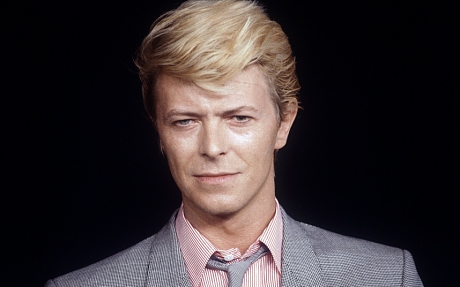
RIP David Bowie


The news of the death of David Bowie was profoundly shocking to me, and it's taken me a moment to collect my thoughts why.

Bowie was an artist who was always able to stay relevant without becoming a parody -- unlike, say, Madonna. It was the endless variety of music he could produce without losing the underlying thread of his talent by imitating a style. He lived that style, worked that style, mined it and made it his own.

From his early glam-rock days to his more recent "rock crooner" era, he never let you lose sight of the fact that it was David Bowie, no matter what name -- Ziggy Stardust, Aladdin Sane, Thin White Duke -- he cloaked himself in. 

If anyone had found a veritable fountain of youth, Bowie had. The endless reinvention and reincorporation of music made him a walking performing encyclopedia of the past forty years.

And he never seemed to age physically. Sure, there were lines and wrinkles, the occasional wattle when he lost weight (possibly from the cancer that took him), gray hair so neatly combed and styled that you were sure he added the gray as a final touch, but you never sensed any less energy from him.

You look at a Mick Jagger or Paul McCartney, Elton John or Peter Gabriel, and you see how time wounds us, saps us of strength and vitality, despite our best efforts at covering that up.

But Bowie never seemed to drain, never seemed sapped. He seemed endlessly energetic.

Many years ago, he foresaw this day as Ziggy Stardust, in "My Death": 
My death waits like a beggar blind
who sees the world through an unlit mind
throw him a dime
for the passing time...
My death waits there between your thighs
your cool fingers will close my eyes
let's think of that and the passing time
My death waits to allow my friends
a few good times before it ends
so let's drink to that and the passing time

But what ever lies behind the door,
there is nothing much to do
angel or devil I don't care
for in front of that door... there is you
Of all the people I imagine who might beat death back, it was the Man Who Fell To Earth. Godspeed, David. You've brought us all joy.

Thursday, December 31, 2015

And So This is New Year...


So what have you done? Another year older. A new one just begun.

(Yes, I took license with the lyrics, sue me)

2015 was a weird year, to be sure. I remember writing early on that the year would be defined by marijuana, and while it wasn't as dominant an issue as I thought it might be, the year sure had the stank on it of old weed.

I mean, really...Donald Trump, the front-runner for a major party nomination? Why? Because he speaks his mind?

Yes, he speaks his mind, the trouble is he is half out of his mind. That this low-rent, tin-plated dickless wonder is even taken seriously by anyone is a testament to the failures of Republican education policies.

Libertarians around the nation lifted their snouts from the troughs of crumbs from their overlords and snorted, squealed, and then rose up on their hind hooves and murmured approvingly. Fucking idiots.

Personally, I can't complain. I had a good year. I cut a lot of chaff out of my life, culled the grain, dropped a lot of dead weight and managed to move on. I grabbed life by the throat and let me tell you, there is no more terrifying or liberating thing to do. And 2016 is poised to be fantastic now that I don't have all the hangers-on to deal with.

So, my dear reader....and I hope I still have many of you around, because goodness knows there were times I wanted to give this up and forget about blogging anymore...thank you for 2015. Thank you to my friends, my family, and my casual acquaintances. Thank you even to those who wished me harm, because fuck you, I won. You only hurt yourself, not me.

On to 2016, my preciouses!

Saturday, November 14, 2015

How to Defeat Terrorism

We need to try something different. America has waged a full scale war in South Asia for thirty years.  We've waged a sort of Cold War against Islam for decades longer, going all the way back to Mossadegh and Iran. 

All we've managed to do is inflame the situation. Europe has struggled with Islamic extremists for centuries, and while things were quiet for a long time, the beginning of the twentieth century saw Europe interfere yet again in Middle Eastern affairs, igniting old passions and angers.

Thirty years of war (going back to the Soviet invasion of Afghanistan) has done nothing but make more rabid dogs. That's a failed policy. This is not a war against people, it's a war against an ideology -- the ideology of jihad -- and every time we've bombed a country, we created more enemies as we've attempted to wipe out that ideology.

One reason President Obama has been correctly circumspect about mentioning Islam in discussing terrorism isn't that he's afraid to call it that, but that by linking it to the religion and not to the morons committing these crimes, he gives our enemy comfort. 

The comfort of having his words slipped into a recruiting video to prove that "America is at war with Islam". A fine recruiting tool, to be sure. ISIS and Al Qaeda appeal to people who are looking for a scapegoat for their problems, and by isolating Islam as a cause of terror (it's not), we give the poor and tormented in South Asia something to vent their frustrations on. 

(It's the same schematic that the Tea Party uses here, I should point out, just not to such an extreme degree. That's a post for a different, more political day.)

All we've done with our "war on terror" is give potential members reasons to hate us, to join their organizations. We in the west have consistently installed dictators and tyrants over them and while those installations have helped tamp down the some of the international violence, it hasn't stopped the anger, only inflamed it. It's like clamping down a lid on a pressure cooker: you'll stop the steam from parboiling your hand over the pot, but eventually, the pressure will release in an explosion and destroy your hand. 

When we've decided to take out one of those tyrants we've installed, it's the people we claim to want to protect that have suffered the most. A hundred thousand Iraqis died in our wars against Saddam, and that's ignoring the collateral damage of the Iran-Iraq war that we probably ignited by weakening Saddam in the Nineties, too. Or the Kurds we abandoned back then. 

I want to be clear, the West is not the main problem here, but we exacerbate the very real problems of starvation and poverty and joblessness and the concomitant hopelessness all that implies.

It's no coincidence that since President Obama's "apology tour" early on in his administration that there have been no organized terror attacks in the United States. That's not to say that terrorists aren't licking their chops thinking about killing Americans, to be sure, but I'm betting it's been really hard to recruit suicidal terrorists to attack us, Obama is just that popular even in the Middle East and South Asia. 

The takeaway, in my view, is that America and the west must disengage from the region and let things settle themselves down, or we're going to end up in a world war, if accidentally. Already we've had frightening incidents that could easily have triggered nuclear annihilation. 

So how to defeat terrorism? Better minds than mine...yes, there are some...have tossed this problem around and come up with nothing. I'm afraid I've done little better. I can imagine a framework that solution might take, however.

1) Economics -- This facet is the easiest one: stop buying crude oil from the Middle East. We've had thirty years of warnings to prepare for this, from skyrocketing gas prices to global warming's effects. It's about time we made a commitment to stop using fossil fuels, but particularly oil. 

This might seem counterintuitive: if people are poor, buying oil can only help them. Well, no. That enriches the status quo, which means it enriches those who are at the top of the economic chain in the Middle East, like the emirs and kings, at the expense of the people. To give the people freedom, we have to defund those who would take that freedom. Note that this would also directly hurt ISIS, who have taken crude oil fields across Iraq. 

But notice something: global warming also directly impacts the people in the region in another way: the troubles in Syria began with a drought in Syria, which forced farmers to abandon their farms and migrate to the cities where they might try to find gainful employment.

But those jobs were non-existent as the economic meltdown of the late Bush administration worked its way through the global economy. 

We need to establish economies across the region that don't rely on the resources of the rich, but on the labor of the poor. Trade with the governments of the region is counterproductive. Trade with the people of South Asia is imperative. 

Trade what? What can replace oil?

Frankly, anything can. Remember, facet one of this discussion is to stop using oil: no oil, no oil economy, no reinforcing the status quo. 

2) The Marshall Plan -- After World War II, and despite the war's far heavier toll on the West, the United States in its capacity as the last man standing extended an olive branch not only to our allies, but to our enemies. We would commit to help them rebuild. 

Why? We learned the lessons of the interregnum of the two world wars: letting problems fester only made them worse, not go away. 

We do owe it to the people of South Asia, we in the West. We created artificial borders that ignored tribes, rivalries, nationalities and ethnicities in an attempt to be expedient. Literally. The divisions were drawn with a ruler on a map. We reinforced those arbitrary borders with force and armaments, and interfered in internal matters when those matters threatened our interests.

Imagine if the cops taped off your house and prevented you from using the bathroom, then stormed your part of the house if you took a piss in a flower pot. That's what we're doing in the Middle East. 

Some would call this appeasement. Some would call this a waste of resources. I would argue that the trillions the United States alone has spent in the last fifteen years to "defeat terrorism" was a waste of resources and that we have to find a better way. A few billion versus tens of trillions sounds like a bargain to me, even if the outcome might end up being the same (it won't.)

To me, this Marshall Plan redux would involve helping the Middle East and South Asia rebuild their infrastructure. It would bring permanent water to drought-stricken areas. It would rebuild roads that we've bombed to hell and back. It would build better schools and hospitals and it would all be done by paying the local residents to do the work and administer the projects. We'd provide resources. They'd get the credit for the accomplishments. 

And yes, we'd rebuild mosques, too. We have to. 

3) Diplomacy -- To sum this up, we need to get the fuck out of the way. The West has spent the last decade dictating policy to the Middle East and South Asia: you will do this, you won't do that, you'll take this and like it, we'll take that and you'll be quiet. 

What I see happening is a Middle East summit comprised of everyone: the nation-states, the sects of Islam (including the radical Islamists in some capacity), the South Asian states like Uzbekistan and Kyrgyzstan, the Turks, the Russians, the Chinese and the West. 

Obviously, we won't just hold one meeting and be done with it. This will take time and energy and focus. It will require reaching out even as we kill terrorists, or finding intermediaries to understand the problems that we can solve with diplomacy and those we'll just have to let them sort out on their own. We can't settle the Shi'a/Sunni divide, for one thing, but if we can persuade the Muslim people that we'll accept any settlement between them that keeps everyone in the region safer, they'll sort it out.

After all, Northern Ireland seems to be working its Troubles out, and surely they've been more peaceful now than twenty years ago. 

Eventually, these disparate talks can be built upon, bringing factions together in the same room, then bringing the agreements made in those rooms to bigger rooms and higher levels. 

If the West gets out of the way and makes the Middle Eastern nations enforce these agreements -- and frankly, without oil and the commitment to rebuilding, why the hell would we even be there anymore? -- they'll eventually work things out. We may not agree with their solutions, but the point is, we won't have to, as we do now.

4) Stealth -- Let's face facts: we're going to have to cripple ISIS and Al Qaeda (again). We don't have to commit to waging a regional war to do so. We have the tools and ability to decapitate the leadership. As we saw with Al Qaeda last decade, that at the very least buys us time. Time can buy us the space to implement the rest of this plan. It lowers the heat under the pressure cooker of recruitment. It buys us the eyeballs and attention span of the people we want to stop from joining these organizations.  

Clearly, this means an unconventional war fought under the radar. We have national policies that prevent us from interfering in the internal affairs of other nations, but those were state matters, and this is a criminal enterprise. And besides, since when has the United States paid anything but lip service to any international agreement? If we're going to break one, let's at least break the right ones, and not the Geneva Convention.

5) A Thicker Skin -- This applies to the West more than to the Middle East and South Asia.

Americans and Europeans are going to die. There is no way to prevent that. Whether we declare all out war and our soldiers die by the thousands or we fight this fight the way I outline above, and citizens and soldiers die by the dozens, we're going to have deaths. My argument is that there will be far fewer casualties for a far shorter period of time.

We're going to have to mature a bit and shrug them off. A little. We're going to have to put aside the bloodthirst for revenge and retribution and work to understand that these deaths are martyrs for a greater cause: the safety and security of all citizens of our nations. 

We can rattle sabres, to be sure, just as we did after 9/11 (and failed to defeat even the enemy that attacked us, much less protect ourselves from future threats), but remember that on 9/11, we even had the "Arab Street" on our side. And lost it in our monumental hubris. We had the opportunity to exhibit dignity and grace and would have prevented hundreds of thousands of enlistments against us. 

Today, the day after the Paris attacks, even Iran has expressed condolences and condemned the attacks, as they too are in the fight against ISIS in Iraq. It's a glimmer of hope. We can take them up on that gesture. 

The other facet of that "thicker skin" is the more troubling one: we have to present a unified front on this project. In America, that will be next to impossible and we may have to cede leadership here to China and Russia. The old dictum that politics ends at the border was thrown out the window by the yahoos of the Tea Party and any attempt to implement this program will have to shut them up somehow. They'll need to develop a thicker skin and stop betraying our national interests. That's the only way we can be effective in this construct.

I think this five step program may be the only way to defeat an ideology. A good parallel in American history is the Mob. We didn't beat the Mob on the battlefield, we beat them by starving them of them of members, by giving immigrants better jobs, and better education, by assimilating them into our culture and providing the opportunities to attain the benefits of that culture to them, and finding ways of tying up the resources of the Mob so they could no longer wage an asymmetric war. 

After all, it took an accountant to put Capone in jail and effectively end his reign of terror. We won't defeat ISIS or Al Qaeda in the desert, we'll finally defeat them when we get the people in the region to stop joining them. Suicide bombers and jihadists have a very short shelf life, so the organizations are always desperate for new members.

It took decades, and even today, we still have mobs and gangs and violence, but only to the extent that we can now treat them as criminal organizations and not an armed resistance. We'll always have ISIS and Al Qaeda and Hezbollah and Hamas or something like them because there will always be underinformed people who are easily manipulated by charismatic leaders and simplistic solutions. This project will make it harder for them to be effective. 

Sunday, November 01, 2015

Innocent as Children

My Mets are losing the World Series.

I'm OK with that. Truth is,  I've watched about three innings of the Series in total. I may have watched nine all playoffs long.

Which is actually more than I watched all season.

That doesn't mean I don't have an emotional attachment to them. I do, and want them to sweep the next three games and take the trophy out from under KC's feet. They can do it. The one thing this team has demonstrated over the season is the ability to turn adversity into wins (see: Wilmer Flores) and there's no reason to think that a team that should be up three games to one can't win three in a row, particularly one that has ben as streaky as the Mets season suggests.

That I know all that is a testament to my loyalty to the team. That said, it saddens me what sports has become in this country, and I think it's a large part of the underlying troubles we endure right now.

For instance, the reason I'm a wishy-washy fan when it comes to watching my team on the TeeVee. For not the first time in my life, I can't, and not because I'm superstitious or some such, but for a more prosaic cause.

The Mets network isn't carried on DISH and I'm more loyal to people who do right by me than I am to people who present a product and tell me to take it or leave it (In order not to sidetrack this discussion, let me just say that DISH has worked hard in the thirty years or so that I've been with them to keep me as customer, keeping my costs down while putting together programming and service to suit my needs).

SNY is not carried by DISH -- neither is MSG or YES, for that matter, which prevents me from following nearly every other local sports team on a regular basis except football, ironically the most socialist of all sports -- so the only games I can watch are the ones on networks or on the local broadcast outlet, WPIX. Those number maybe a dozen or so.

They were, but the Mets decided to abandon whatever percentage of Mets fans have DISH when DISH didn't buckle into their somewhat outrageous demands. Profit, before product.

The first time the Mets abandoned a significant portion of their fan base, that time was a lot harder to swallow. The team decided to take nearly all games off over-the-air broadcasts and put them on cable TV (first on Cablevision's SportsChannel, which morphed into FoxSports NY, and then ultimately to SNY, the Mets-owned outlet).

The team banked on fan loyalty to carry it through these, and they were pretty much spot on in this. As more and more cable subscribers signed on (that's another story, the roll out of cable in NYC), the team grew a larger fan base.

All the while, every month, nibbling away at the combined pocketbooks of their fans, even when the season was over. Profit, over product.

I wrote all that to personalize the rest of this post, which is really about the business of sports.

I could bore you with statistics and numbers about the growth and mutation of sports from entertainment to a large and wildly profitable business, but let me put it on a human scale for you.

When I was a kid, watching the Mets on a 19" black and white Philco, the average ballplayer made less than the average union worker. He had to take a job to feed his family until training camp opened up, usually blue collar since college sports was what it should be, a sidelight to getting an education, so most players if they wanted a major league career refused to forfeit four years of their prime for a degree.

If he was smart and good looking, maybe he quarterbacked the local team, he could get a white collar job in a bank or a brokerage, entertaining clients. Only the really big stars, the Willie Mayses or the Joe Namaths, made enough from endorsement contracts to tide them over between seasons, or could command a contract big enough to allow them to focus on their careers and not on survival after the season.

And God forbid you have a career ending injury, altho that happened all too frequently. You had no education, no job prospects (because, really, how many jobs require you to hit a 0-2 curve ball?) and an aching body. It's no wonder that, even today, all professional sports unions have to provide charitable help for their forebears, forty years after the explosion of money in sports.

Today? Even a slightly-better-than average player (say, Daniel Murphy, since he's on my mind, who has an average WAR over 162 games...I'll get to the statistics thing in a bit....of 2.27, meaning he'll give you almost three wins more than the average second baseman. A great player can give you ten or more extra wins) can command tens of millions of dollars a year.

The average player doesn't need to work a second job. He has healthcare through his union or his team, is vested in a pension based on his salary after a certain number of years playing (and is partially vested starting on day one of his contract).

None of this is to begrudge large money contracts. I'd rather a millionaire kid who busted his ass and forsook his youth take a few million than let some rich trust fund kid who happened to cobble together enough money from his inheritance or the markets take it.

Indeed, that's the point. The contracts are indicative of precisely how much money there is to be made in sports, if you can afford to take the risk (and once you reach a certain threshold, the risk is zero).

Case in point: my Mets. Concurrent with the launch of the SNY Network, the Mets also built an entirely new stadium, primarily with private funds (there were some municipal funds that targeted renovating the surrounding neighborhood and that's an entirely different story).

The owners, the Wilpons, were also friends with one Bernie Madoff, who suggested many years ago that they invest their money with him. Presumably, an awful lot of that loot was tied up into the stadium and cable channel deals. The Wilpons made money with Madoff, to be sure, so much so that, if not for an arbiter who took a very lenient view to their cause, they likely would be bankrupt today, forced to sell the team and channel.

As it is, they spent an awful lot of the last decade on a very tight team budget, what with building up reserves for the new stadium, the new channel (they lost all that guaranteed income from FoxSports, as well as a lot of fans who had to wait until SNY was carried on their provider), then building a reserve in anticipation of the Madoff decision.

In practically terms, this meant the on-field product suffered, since baseball is a business, not a sport, and athletes expect to be paid, and paid well. They aren't doing it for the love of the game anymore than the Wilpons are giving away a product for free.

The short story, then, is the team sucked, the fans hated it and Citifield, a really beautiful ballpark, was basically empty for five seasons. Money was being lost hand over fist. Attempts to make changes that involved as little expenditure as possible (moving in outfield fences, twice, making the park's best quality, a pitcher's park, one of its worst) were made, but they didn't help. It was a dismal place to be.

Once the favorable decision was handed down -- $75 million instead of $162 million -- things seemed to ease up, and spending commenced. That was in February of this year. Not coincidentally, the Mets made the World Series that same season, even if it was not smooth sailing the entire way.

In 1964, the entirety of MLB made $21 million dollars in television revenues nationally, all teams, including local TV deals. . The average player's salary of $15,000 (adjust to 2002 dollars, respectively, $123 million and $85,000). In 2001, the last year for which figures can be compiled, the national TV revenue jumps to an eye-popping $1 billion (average salary, $2.4 million). Note that, because teams are all privately held, we can't even put together a total television revenue figure anymore. That's just the national contract for FOX and ESPN (among others).

We can't even estimate what the local contracts paid out, but someone has tried and calculated a few billion dollars more annually, making the entire revenue package for baseball upwards of $8 billion dollars (including tickets, merchandising and other sources). Using those same estimates, as recently as 1995, baseball took in about $2 billion in real dollars ($1.4 billion unadjusted). That's about a 7% return every year for twenty years in real dollars.

Staggering. It also explains the rise over the past two decades of the statistical analysis of games and players. I mentioned WAR earlier, or Wins Above Replacement. What this measures is the amount a player contributes to the wins his team gets each year. I don't want to get too technical so let's make this brief.

The average wins a team has each year is 81 (there's 162 game schedule and for every win, there has to be a loss, so the league average is 81-81. It has to be). That hypothetical average .500 team is populated with precisely average players, then. If you replace that hypothetical average player (who hits .250, by the way; again, the league average) with any other player, how many wins does that player contribute to the team (or deducts, as the case maybe. Again, for every above average player, there must be a below average player).

So a player with a positive WAR helps your team be better. Daniel Murphy helps slightly more than the hypothetical average player over the course of a season, giving you 1.6% better team. To put that into perspective, a team with 95 wins, which usually means its playoff bound, is about 60% better than average. He helps. Just not that much.

Back when players worked as grave diggers in the off-season and families owned baseball teams and precious little else, teams could afford to assess players by the seats of their pants. There was a lot of scouting, talk about "five tool players" (run, throw, hit for average, hit for power, and field), and whether a guy had a "good attitude" (e.g. he could be counted on to make curfew). There was some statistical analysis -- batting average, ERA, slugging and fielding percentages -- but they were rudimentary and fairly unreliable for decision making.

Back in the late 1970s, just after the introduction of free agency, and just as sports was becoming a billion dollar business in America and the world and computers were becoming something more than a defense contractor's wet dream, a group of statisticians and mathematicians decided that baseball needed an upgrade. Forming the Society of Baseball Research and led by Bill James, sabermetrics was born.

The goal was simple: to try and understand why some teams win, and some teams lose. What factors play into this? Was there a way to codify differences in the outlying circumstances for a particular player that would allow a manager to assess a player objectively (apply the scientific method to baseball, in other words)?

This could only have been accomplished with computers, of course. The massive amounts of data involved make this physically impossible, even with a good calculator.

Naturally, as the science evolved, it started to attract interest from ball clubs desperate to field a winning team.

Because winning teams attract money. Just ask the Yankees or Dodgers.

Titles are nice, but money is nicer. That really could be the motto of all sports nowadays. But look what happens: once you start to codify precisely how to maximize the utility of your roster of players, you put yourself into a mindset of maximizing the utility of your entire investment.

Sports becomes less game and more business. It becomes less about raising a trophy over your head and more about raising your dividend.

And that sucks the joy out of anything. Just ask anyone who works a job. Or runs a small business.

Once you introduce serious money into an industry, you start to attract serious businessmen. It's like farming: once a businessman realizes that your family farm is underutilized and could make a lot more money, he'll make an offer to buy you out.

If you sell, the farm will stop growing potatoes, and start growing soybeans. Or worse, if it's in a valuable location, it'll start sprouting condos and mini-malls. It doesn't really matter if those potatoes were the best in the business, or if you fed an awful lot of families who needed the food. It only matters how many dollars could be combed out of your furrows.

The same construct happens with sports teams, which aren't so much "teams" anymore as attractions for the mini-mall that a ballfield has become.

Sports is not alone in this, to be sure. Everything has a price tag on it now, right down to the local news broadcast, which increasingly is filled with promotional pieces for the latest premiere from the flagship film company that owns the station, or whatnot.

But sports holds a particular place in the hearts of Americans. Baseball, especially. After all...and I quote:
The one constant through all the years, Ray, has been baseball. America has rolled by like an army of steamrollers. It has been erased like a blackboard, rebuilt and erased again. But baseball has marked the time. This field, this game: it's a part of our past, Ray. It reminds of us of all that once was good and it could be again. 
Which is why it still hurts to see my Mets losing, even tho they lost me years ago. In the end, I see Wilmer Flores crying at second base and I think back to Bud Harrelson and how much heart he played with. And I see Noah Syndergaard throwing a hundred mile fastball at someone and channeling Nolan Ryan. And I see Jacob de Grom with his wild hair, and Michael Conforto and Steven Matz, and look back to Tom Seaver and Ed Kranepool and John Matlack, heroes of my childhood.

I'm reminded as I watch that this team that I follow has a history with me, and that history was a bigger part of my life than it should have been (even if I was thrilled when a Mets scout once told the adult me I could have been a big leaguer). Sports plays on that nostalgia, baseball more than others. It's long been promoted as a multigenerational game -- a dad tossing a ball with his daughter, a little boy biting into a hot dog at his first ballgame, grandsons and granddaughters arguing statistics with grandpa.

And we'll gladly fork over hundreds or thousands of dollars a year without even thinking about it, for it is money that we have and peace that we lack.

For me, baseball was about the only thing my dad and I shared a passion for. That was an innocent time, a better place. A part of me that was once good.

But never can be again, and I'm having a hard time reconciling myself to that.

Lets Go Mets!

Friday, October 09, 2015

The Fiasco That Is Republicanism

Yesterday's stunning news...stunning in the same manner that getting hit by a clown car is stunning...that the GOP can't even get a candidate to stand for the House Speakership speaks volumes to a terrifying prospect.

A one-party America.

Look, it's clear the GOP is falling apart much like a poorly-built Canestoga wagon careening down a Rocky Mountain pass, but the prospects of the nation after it crashes into the rock slide in the river valley are troubling.

First, let's look at the likely scenario of the Tea Party or some form of it wresting control of the Republicans away. This is a small faction of America, roughly 25%, that lives in an insular bubble. It's well funded by con artists and Kochsniffers who have forgotten how hard it is to be an American.

You could, rightly I think, make the argument that the wealthy in America are no longer American as much as they are transnational, which is not as "Caitlyn Jenner sexy" as that sounds. While the bulk of their corporate and investment empires are firmly planted in American soil, their money vacations in the Cayman Islands and winters in Gstaad, and works in China and Southeast Asia to maximize it's exploitative potential.

They *say* they're American, but the truth is, that nationality will only last as long as it's profitable. After all, when Rupert Murdoch wanted to tame the entertainment frontier of China, he took a Chinese bride...after he became a naturalized US citizen.

These are the people who control the Teabaggers: wealthy corporatist Americans who believed that, through Murdoch's FOX networks and other propaganda outlets, as well as dismantling any worker protections like unions and government labor boards, they could extend the American corporate empire by a few decades until China and India became ripe for exploitation. Now that they have, you'll begin to notice signs of American decay.

This is because the construct that the Teabaggers have craved, a belief that somehow the private sector's patriarchal and patrician "bad dad" attitude is what makes America great -- that somehow individual greed adds up to social responsibility -- is being slipped out from under that small but vocal and violent crowd.

Destroying the party most closely aligned with that construct along with it.

Moderate Republicans, if any still exist, have long been pariahs in their own party, but you'll notice more and more that small voice of relative reason seeping through. Just yesterday, in the midst of the maelstrom of madness, Speaker-Apparent Kevin McCarthy said something very telling:
Asked if the House is governable, he says, “I don’t know. Sometimes you have to hit rock bottom.”
The rock slide in the river valley, in other words.

The historical perspective on this is ironic: the Republican party was a splinter faction from the Whigs in the 1850s, when moderate Republicans decided the Whigs had become too batshit crazy even for them. Republicans were for modernizing the nation.

Now the circle has turned. Moderate Republicans are in danger of extinction, leaving the Whigs back in charge. Karma, I suppose, but when you sell your soul to the Devil, he collects when its convenient for him.

The prospects of a Teabagger-owned and operated Republican party means there are very few compromise positions that can be had, and that makes governance next to impossible, at least for the foreseeable future. We've already seen something on the order of twenty years of mismanagement and mislegislation on the part of Congress, ever since Newt Gingrich passed his Contract on America components, an early Koch brothers paean America.

It's starting to look like the American people are about full of the nonsense, tho, and that may be a good thing. What may not be a good thing is that the conservative wing of the country played the long game of chess, and set traps and pitfalls that will be very hard to overcome: gerrymandering, wresting control of local and state legislatures to pass laws sympathetic to a fascistic hegemony of conservative oversight of the minutiae of local politics, all but guaranteeing a competitive advantage for any Republican candidate in nearly every district in enough states to ensure a voting bloc in Congress.

See, it doesn't really matter what the majority of Americans want or even vote for. So long as the manipulation of process, including violating the right to "one American, one vote", can be allowed to stand by the Five Horseman of the SCOTUS, America will not be American again.

We'll have what is effectively one political party, and a faction. And one political party...and here, I have to remind you how much I dislike Republicans...cannot govern effectively. Democrats need an opposition party, lest the country fall into a hive mind. Conflict generates ideas.

Too much conflict stifles them, however. RINOs need to step up and reclaim their party.

Wednesday, September 23, 2015

Day of Atonement

Today marks Yom Kippur, the most sacred day of the Jewish calendar, the Day of Atonement. It is, for want of a better metaphor, a day of soul-cleansing, when a Jew is supposed to make up for any slights and insults committed against his neighbors by asking their forgiveness.

This is a good tradition to have, and it appears in nearly every major religion. Catholics have monthly confessions, Protestants believe in prayer at night to ask God's forgiveness...Christianity could take a page from Judaism here...Islam has the tawbah, and in fact discourages public confession of sin, altho it does permit the sinner to recompense the offended. Buddhism is unusual in that it is the offended that initiates the act of forgiveness to allow the offender to atone for it.

In all circumstances, atonement requires humility. It requires letting go of one's exceptionalism, if only for a moment, and acknowledging that one is as mortal as anyone else and prone to mistakes, then asking forgiveness for those mistakes. One puts one's soul in another's hands. There are few experiences more equalizing in the human condition than an apology.

As it is Yom Kippur, I want to focus on the Jewish tradition because there's a lesson to be learned here. The faith calls for making the body uncomfortable on Yom Kippur: no food, no bathing, no (leather) shoes -- altho I'm not sure how they view sneakers -- no perfumes or lotions, no sex.

By making the body uncomfortable, the thinking is, the soul becomes uncomfortable, too. The pain one has caused others then registers viscerally in this discomfort. The only way to ease the soul is to unburden it, to cleanse the soul.

I think it's time for America to come to this concept. I think a national day of atonement, both among the citizens as well as across borders, is in order.

America is an exceptional nation, this has long been believed here and in many ways, we are. We have abundant natural resources, safe borders, plentiful land, beautiful landscapes, mostly moderate weather, and have been a beacon of freedom to people around the world.

We are also an exceptionally evil nation. We lord it over everyone else that our way is the best way, the one true way, like Scientologists in a subway stall. Our culture, both the good but more importantly the bad, has infused itself globally -- to the point where more Iranians know who is running for President than Americans. When we can, we position troops to enforce our ideas of power.

Force is not power, by the way. Force is a display of weakness, of acknowledging that you do not have control of a situation. Children use force. Adults use power. If you don't believe me, try not doing your job for a week or so. Your boss isn't going to call in the Seventh Fleet.

For a brief shining moment in world history, we were literally the last nation on earth: Europe was rebuilding from World War II, Russia and China were emerging from internal revolts, Japan was scorched earth, India was a third world nation...only America had an economy poised to take advantage of the post-war expansion and rebuilding.

You know the old saw about being born on third base, thinking you hit a triple? While that's not entirely true of America, it's not that far from true. But for an ocean, we would easily have been England or France. And given that Germany had made such advances in rocket technology as it had, we were maybe a year out from being England.

But for the pairing of a great war and a Great Depression, we would have lingered in recession for nearly a decade longer. Public works were great programs (and we could use those about now, too) but it was the ramp up for war that kicked the economy into gear.

But for our natural resources, we would have had trouble keeping up with our needs.

We were able to exert power across the globe because other nations needed our goods, our products, our services, our resources. We were, quite literally, the Wal-Mart of the world, where you could buy anything, and we forced a lot of other outlets off the page for a while. When that started to dry up, we started throwing our weight around the world.

We're a lucky country, maybe even a blessed country in that we have such bounties, but that's no reason to believe we are somehow divinity. Yet, all too frequently, we act that way. We need a dose, a large dose, of humility.

Look at our Presidential candidates, for instance: how many of them have said "God told me to run"?

Indeed, one, Scott Walker, compared himself to Jesus, saying that he was called to lead by dropping out of the race.

He died for your sins, Ben Carson.

Is it not the height of arrogance to claim that a higher power sought you and only you out and spoke to you and only you about the state of the union? Wouldn't we rather have a President who listened to the people and not the voices inside his own head?

Yet, this is the face we wish to present to the world: the last humble man to sit in the Oval Office was Jimmy Carter -- and saying he's humble is by comparison to the others only. We revel in egoism. We bathe in it. And then when that President does anything to even slightly acknowledge that other nations might be in the same league as America, at least a loud cacophonous portion of us bang empty oil drums and rattle cans with stones about "selling us out".

This is why we have troops in nearly every nation on the planet, enforcing our imperial economic hegemony. We lead not by influence, but by force.

There are 7.5 billion people on this planet of which American make up about 4%. We have to live with these people, too. What we do affects them, and what they do certainly affects us, else why is there a refugee crisis from Syria? From Mexico and Central America? Why does our stock market get crushed anytime China's catches a cold?

America likes to think of itself as the CEO of Planet Earth, Inc. Maybe it's time we picked up a bucket and mop and saw things from the other side.

Friday, August 07, 2015

Adios, Jon Stewart


I'm going to miss Jon Stewart. That final speech (NSFW version) was a valedictory to carry on the torch of enlightenment, something those of us in Blogtopia (© Skippy) must keep burning. We will never be the concentrated force for all that is good and right in the world that he was (and still might be) but for sure, we can in our own ways make a difference.

It's been a tough twelve months for those of us on the left who take great pleasure in ignoring the false narrative of the corporate conservative mainstream media like FOX, and CNN, CBS, et al. We've lost Colbert. We've lost Stewart. We lost Letterman, even if he was light on politics.

And we're losing MSNBC to a madman who somehow believes imitating a network with a dying audience is going to improve his ratings.

Short term? Maybe, but long term, you want us liberals -- no, you NEED us liberals.

Thank god for Larry Wilmore, Bill Maher & John Oliver,  Free Speech TV and LinkTV (both of which stream for free on your computer. Thom Hartman, Amy Goodman, Stephanie Miller, Bill Press...that's a really great line up of progressive voices, beacons in the wilderness all).

And there are rumors...

Back to Stewart. I first noticed The Daily Show when Craig Kilborn was the host. In fact, if you search the outtakes of his tenure there, you'll find my shining face being interviewed by him (ended up in the dining bay, sadly, altho my daughter splashed across the screen).

I've been a fan ever since. I liked the idea of getting my news in an entertaining fashion. What I didn't expect, what I could not have expected, was to be informed as much as I have been. I will miss that. I will miss watching stories that the other "news" outlets had missed completely.

And Jon had his causes, and he worked hard to bring them to the forefront of the American conscience: the Zadroga Bill springs to mind, as does the VA hospital scandal. He was a liberal, but he held Democratic feet to the fire when it was appropriate (see: the VA hospital scandal). His sense of fair play never got in the way of a good story because his stories WERE about fair play.

And I think that's what I will miss most about Stewart: in a sea of bullshit, a cesspool of manufactured crises and FIRETRUCK! warnings, his show was a half hour (OK, eventually an hour, between Colbert and now Wilmore) where you could clamber onto terra firma and laugh at the ridiculousness of it all. "Restore Sanity," indeed!

This is the torch you and I and everyone else we read and comment with must pick up, dust off, and run to the finish line.

In a world where a blowhard egoist can lead presidential polling for one of the two major parties, we have to stand by, prepared to make fun of his pizza-eating habits and to deconstruct his personality, demolishing his ego and its defenses brick by prick. Why? Because it's just fucking insane.

In a world where there is an huge disconnect between morality and morals, we have to stand guard against the invasion of morals into morality -- that is, to ensure that rational thought is held in the highest regard over the emotional gut punch of fear and hatred. Comedy, laughter, can do that.

And in a world where it's way too easy to take yourself too importantly, there's Arby's.

Adios, Jon. You leave us, but you've not left us. Thanks for the laughs.

Thursday, August 06, 2015

The Best Photo You'll See All Day

Courtesy HuffPo


That's a lunar eclipse, from behind the moon.

Wednesday, July 29, 2015

Friday, June 19, 2015

Racism and White America

Racism is about power. It's about realizing that each of us in powerless in this great big world, and so we band together, and find some way to grab a little power for ourselves. Strength in numbers.

It's easier to find power if you've got people who are even more powerless than you are. That's where the racism comes in. That's where the bigotry and hate comes in, because at some level, we understand that, but for the grace of God, that could be me. And that terrifies us.

So rather than fight the power -- which would entail actually putting some skin (no pun intended) in the game and putting our necks on the chopping block -- rather than pick up a pitchfork or a torch and go storming the castle and grabbing power where it actually lies, we're content to snipe power where we can find it, even if it means hurting innocent people. 

Wednesday, May 27, 2015

Party like it's 1992

In a hilarious, and profoundly obtuse, op-ed in Wednesday's The New York Times, Peter Wehner, a "senior fellow" at the Ethics and Public Policy Center, asks "Have Democrats Pulled Too Far Left?" And, as with most headlines that end in a question mark, the answer is No, they have not. What has moved to the left is the American people.

Wehner, who "served in the last three Republican administrations,” immediately shows just how out of touch he and the right are by comparing 1992 to 2015. He tries desperately to show that Barack Obama is so much further to the left of -- get this -- Bill Clinton. Alternatively, the GOP "hasn't moved very much from where it was during the Gingrich era in the mid-1990s"; as if that's a good thing.

For Wehner, this is a big problem for the Democrats because they lost BIG in the 2014 elections, which had the lowest voter turnout since WWII. He doesn't  mention that. He also doesn’t mention GOP gerrymandering, or gutted voter ID laws.

What he does mention are a lot of scary things —  if you haven't had a new idea since the 1990s.

"Mr. Obama is more liberal than Mr. Clinton was on gay rights, religious liberties, abortion rights, drug legalization, and climate change," explains Wehner, apparently not realizing that is a new millennium.

I can’t believe I have to explain this but, American thinking on every single one of those things have shifted.

He even claims that at one point that the nation is “more conservative today than it was in the mid-1990s.” This idea is inferred from  a “recent Pew poll’ (that I could not find) that says the country agrees with Republicans on foreign policy and taxes. On Taxes, here’s a Pew poll disagreeing with Wehner and the GOP.  

"[Obama] has focused far more attention on income inequality than did Mr. Clinton, who stressed opportunity and mobility," he continues, not caring that wages have stayed flat for the last 30 years, which include the 23 years he is comparing, siphoning wealth upwards. Way harsh, Tai.

For effect, the bitter, pointless screed goes on to name other lefties like Holder, Hillary, FDR, de Blasio, and Warren, and Ed Miliband for some reason.

But, if you listen to the folks that Wehner does not call out — any of GOP presidential candidates — they are all promoting the same slogan: "Still The Same After 25 Years.” That isn’t what the country wants and that’s why the Right is trying to fix things, one-person-one-vote at a time.